
Creating a comfortable and efficient home office is essential for anyone working remotely or spending extra time on personal projects. A well-designed space can enhance focus, reduce stress, and inspire creativity, making your workday more enjoyable and productive. Here are practical tips to help you create a cozy and productive home office, no matter the size of your space.
Choose the Right Location
Pick a Quiet, Well-Lit Area
Start by selecting a spot in your home that is quiet and receives plenty of natural light. Natural light helps reduce eye strain and improve mood, which can increase productivity. Avoid high-traffic or noisy areas like the living room or kitchen, if possible.
Consider Privacy and Boundaries
If you share your home with others, setting boundaries around your workspace is important. A separate room with a door is ideal, but if that’s not an option, use partitions or arrange your desk to face away from distractions. Clear communication with household members about your work hours can also help maintain focus.
Invest in Comfortable and Functional Furniture
Ergonomic Chair and Desk
The foundation of a productive workspace is ergonomic furniture. Choose a chair that supports good posture and offers adjustable height and lumbar support. Your desk should be at a height where your forearms are parallel to the floor when typing, reducing strain on your neck and shoulders.
Desk Space and Storage
Select a desk large enough for your essential work items but not too bulky for your room. Adding storage solutions like shelves, drawers, or file organizers keeps your desk clutter-free, allowing for better concentration.
Create a Pleasant Environment
Personalize Your Decor
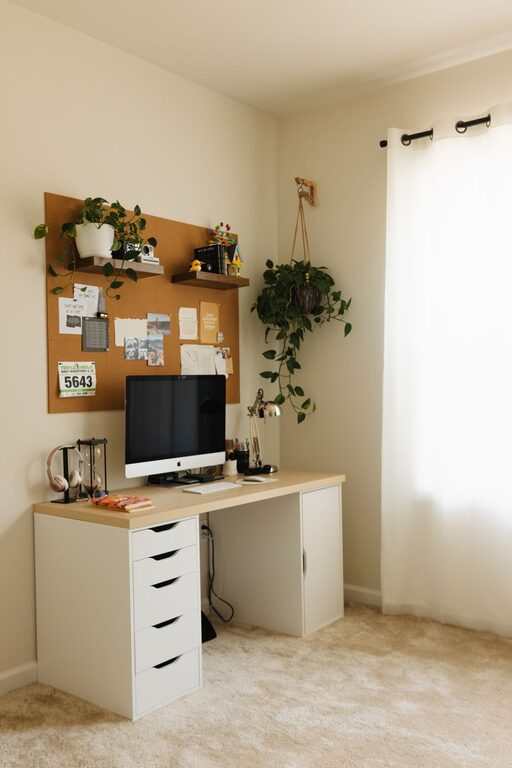
Incorporate personal touches such as artwork, plants, or photos that make the space inviting without being distracting. Plants improve air quality and add a calming element. Use soft textiles like rugs or cushions to increase coziness.
Choose Calming Colors
Colors influence mood and productivity. Soft, neutral shades like light gray, beige, or pastels create a soothing atmosphere, while brighter accents, like blues or greens, can invigorate and inspire. Avoid overly stimulating patterns or colors.
Organize for Efficiency
Keep Essentials Within Reach
Design your workspace so that frequently used items—computer, notebook, pens—are easily accessible. This minimizes interruptions and helps maintain your flow.
Use Cable Management Tools
Messy cables can add to visual clutter and stress. Use clips, wraps, or under-desk trays to keep wires organized and out of sight.
Digital Organization
Maintain a clean digital workspace as well. Organize files, use effective folder structures, and clear your desktop regularly to reduce digital distractions.
Optimize Lighting
Combine Natural and Artificial Light
Natural light is best, but supplement it with soft, adjustable lighting for darker hours. A desk lamp that offers focused light is helpful for reading and detailed tasks.
Avoid Glare and Shadows
Position your monitor and lights to avoid glare on your screen or creating shadows on your workspace. Indirect lighting or adjustable blinds can help manage this.
Prioritize Comfort and Wellness
Take Breaks and Move
Even in the coziest setup, sitting for long periods can hinder productivity. Incorporate short breaks to stretch, walk, or do quick exercises to rejuvenate your body and mind.
Maintain Good Air Quality
Regularly ventilate your workspace by opening windows or using an air purifier. Fresh air enhances concentration and decreases tiredness.
Add Technology That Supports Productivity
Reliable Internet and Equipment
Ensure your internet connection is fast and stable. Invest in quality peripherals like keyboards, mice, and headphones to minimize technical frustrations.
Use Productivity Tools and Apps
Tools for task management, calendar scheduling, and time tracking can help you stay organized and meet deadlines efficiently.
Set a Daily Routine
Establish Work Hours
Having consistent work hours trains your mind to focus during those times and helps separate work from personal life.
Create a Start-of-Day Ritual
Small rituals like making coffee, reviewing your to-do list, or tidying your desk can signal the beginning of your workday and get you into the right mindset.
—
By following these tips, you can transform any corner of your home into a warm, inviting, and productive office space. Remember, the key is balancing comfort with functionality to support your work habits and well-being. With a little planning and personalization, your home office can become a place where you enjoy spending time while accomplishing your goals.
Related Posts
Tips for Creating a Cozy and Functional Home Workspace
Creating a cozy and functional home workspace is essential for…
Effective Tips for Organizing Your Home Office to Boost Productivity and Comfort
Creating a well-organized home office is essential for productivity and…
Tips for Creating a Relaxing Home Office Environment
Creating a relaxing home office environment is essential for maintaining…