
Creating a relaxing home workspace is key to staying productive and maintaining well-being, especially as many people continue to work remotely. A thoughtfully designed workspace helps reduce stress and distractions, allowing you to focus better and feel more comfortable throughout your workday. In this post, we’ll share practical tips for turning any room or corner in your home into a calming and efficient work area.
Why a Relaxing Workspace Matters
Your work environment impacts your mood, energy levels, and ability to focus. When your space feels cluttered or uncomfortable, it’s harder to concentrate and stay motivated. Conversely, a relaxing workspace supports deep focus, creativity, and even your physical health. Taking time to create a workspace that feels inviting and peaceful can improve not only productivity but also your overall well-being.
Choose the Right Location
Find a Quiet, Bright Spot
Look for a space in your home that is away from high-traffic areas and noise. Natural light has a positive effect on mood and alertness, so try to set up near a window if possible. Avoid spaces that feel cramped or dark, because these can increase feelings of stress.
Consider Functional Zones
If you don’t have a dedicated room, divide a larger space into zones. For example, your office zone can be separate from where you relax or eat. Maintaining clear boundaries between work and personal life at home is essential for balance.
Select Comfortable and Supportive Furniture
Invest in an Ergonomic Chair
An ergonomically designed chair provides proper lumbar support and helps maintain good posture. Sitting comfortably reduces fatigue and the risk of strain or injury during long hours at your desk.
Choose a Desk that Fits Your Needs
Select a desk with enough surface area for your computer, notebooks, and other essentials. Adjustable desks that allow you to alternate between sitting and standing can also promote better health.
Organize with Function and Calm in Mind
Declutter Regularly
Keeping your workspace tidy prevents distractions and helps you focus. Use trays, drawer organizers, or storage bins to keep supplies in order.
Use Cable Management
Too many visible cords can make a workspace look chaotic. Use clips or sleeves to keep cables neat and out of the way.
Add Calm and Inspirational Elements
Bring in Natural Elements
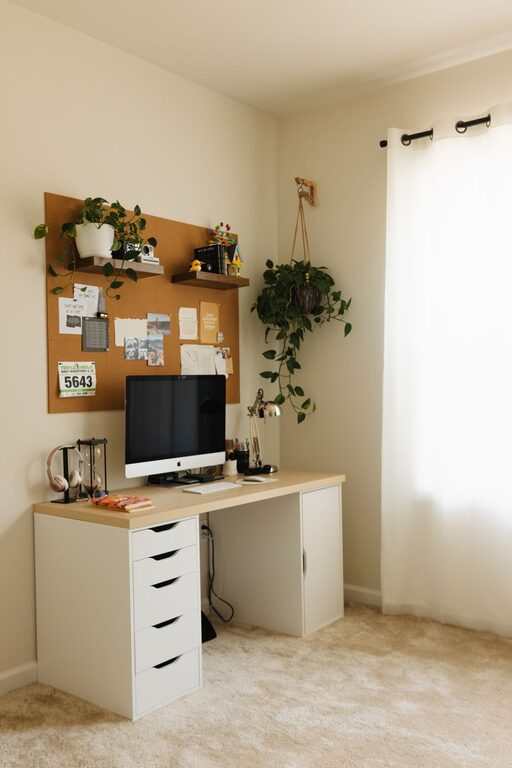
Plants not only add visual interest but can also improve air quality and create a relaxing atmosphere. Choose easy-to-care-for plants like pothos or succulents if you’re new to indoor gardening.
Personalize Thoughtfully
Add a few meaningful items like photos, artwork, or inspiring quotes. Avoid cluttering the space with too many decorations, which can be distracting.
Use Soft Lighting
Harsh lighting can cause eye strain and discomfort. If natural light is limited, use desk lamps with warm bulbs or adjustable settings to create a soothing ambiance.
Incorporate Technology Wisely
Choose Quiet Equipment
Keyboards, mice, or printers that operate quietly can help maintain a peaceful environment.
Minimize Notifications
Turn off non-essential alerts on your computer and phone to avoid constant interruptions and help you stay focused.
Develop Healthy Habits in Your Workspace
Take Regular Breaks
Step away from your desk periodically to rest your eyes and stretch. This helps prevent fatigue and boosts productivity when you return.
Practice Mindfulness or Breathing Exercises
Incorporating short mindfulness sessions can reduce stress and refresh your mind during busy workdays.
Maintain Consistent Hours
Having defined start and end times for work helps maintain balance and signals your brain when it’s time to focus and when to relax.
Make It a Space You Enjoy
Ultimately, your workspace should be a place where you feel calm, focused, and motivated. Experiment with different layouts, colors, and tools until you find a setup that suits your style and work habits.
—
Creating a relaxing home workspace doesn’t require a major renovation. Small changes—like adding a plant, adjusting your chair, or organizing your desk—can make a big difference. By designing a work environment that supports both productivity and well-being, you set yourself up for success inside and outside of work.
Related Posts
Tips for Creating a Cozy and Functional Home Workspace
Creating a cozy and functional home workspace is essential for…
Effective Tips for Organizing Your Home Office to Boost Productivity and Comfort
Creating a well-organized home office is essential for productivity and…
Tips for Creating a Relaxing Home Office Environment
Creating a relaxing home office environment is essential for maintaining…